The AI Time-Bomb That Could Soon Empty Every Bank Account in America
Dear Friend,
It's 6:12 a.m....
Your phone is buzzing on the nightstand.
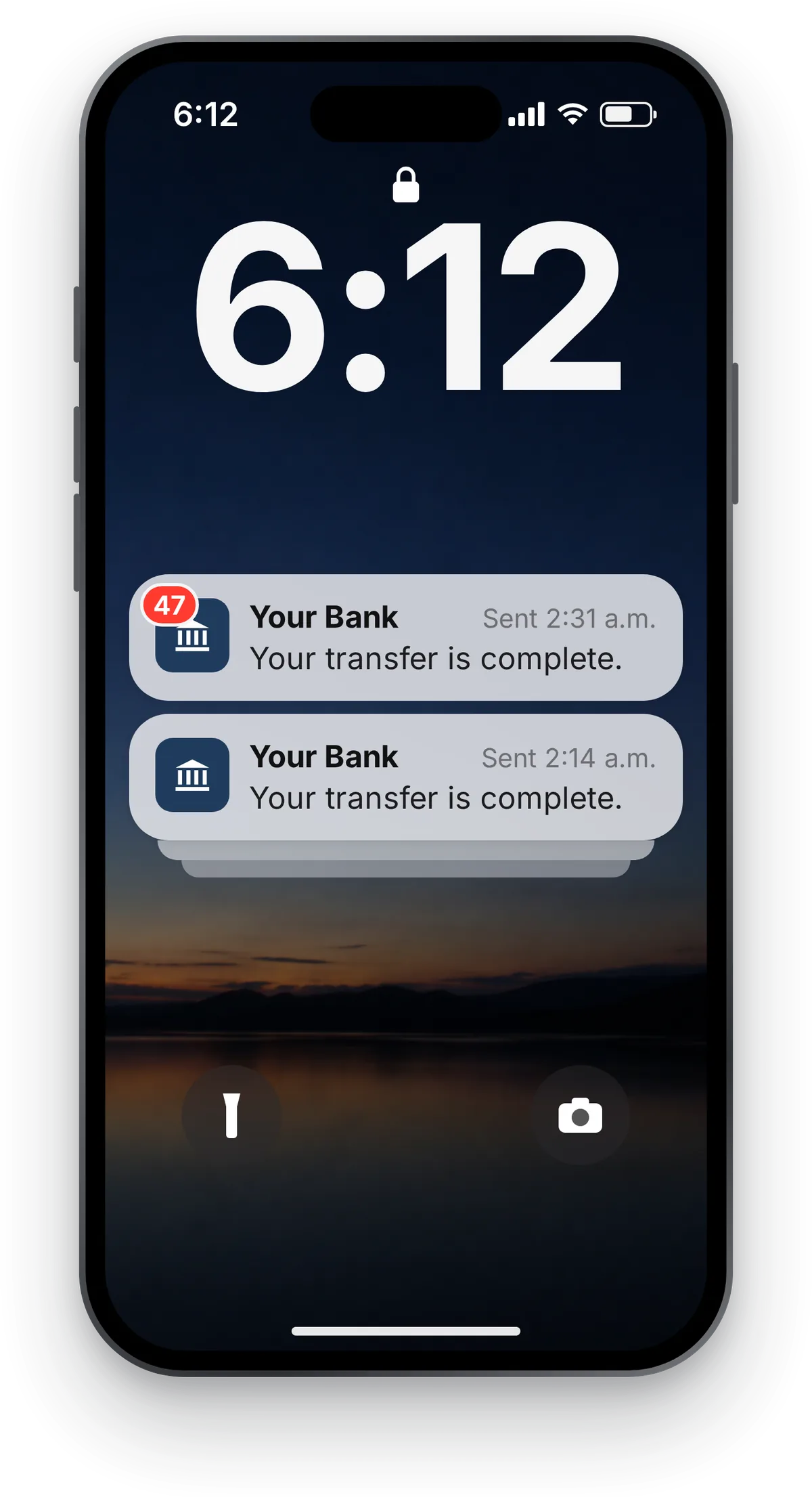
47 notifications. All from your bank.
You reach over and squint at the screen...
"Your transfer is complete." Sent 2:14 a.m.
"Your transfer is complete." Sent 2:31 a.m.
You didn't make any transfers.
You were asleep.
You sit up and open the banking app.
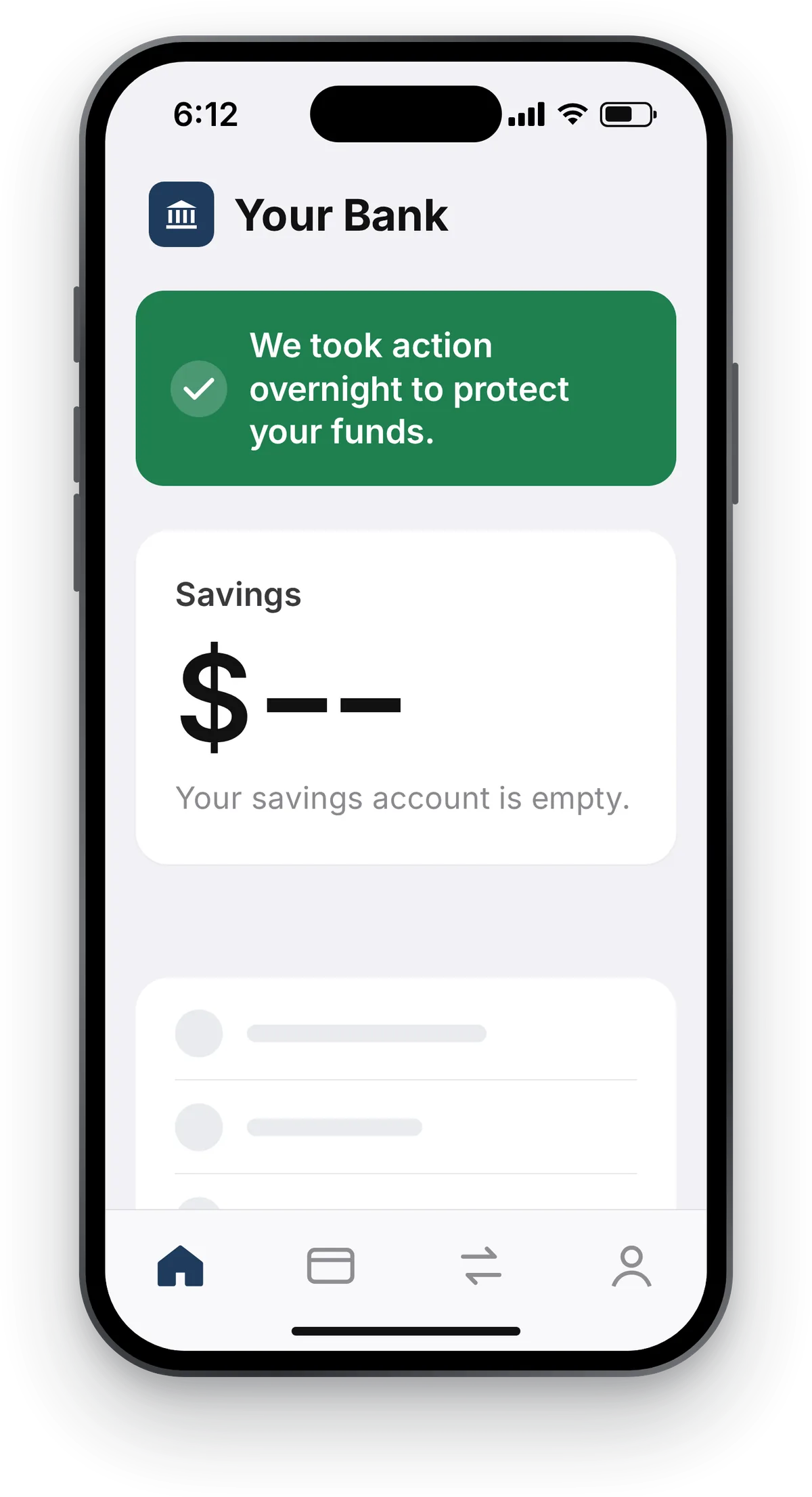
Your savings account is empty.
A cheerful green banner sits across the top of the screen:
"We took action overnight to protect your funds."
In the kitchen, your wife is staring at her phone.
She got the same messages.
Same green banner. Same empty account.
You call the bank.
The automated system can't tell you anything.
Neither can the human you wait 45 minutes to reach. She's reading from a card.
Through the front window, you see your neighbor standing in his driveway.
Bathrobe. Coffee. Staring at his phone.
He looks up at you and holds up the screen.
"Yours too?"
By 8 a.m. you realize... it wasn't just you.
It was everyone. All at once.
You turn on the TV.
The morning anchors look rattled.
They're reading a statement instead of the news.
Stock futures hit their floor before the open.
No explanation.
The word they keep using is "glitch."
Your phone buzzes again.
An email from your boss:
"Payroll may be delayed this week. Waiting on the bank. Will update."
You check the app again.
There's a number in your savings account now.
It's wrong.
It's not zero anymore.
It's just... less than it was on Friday.
You refresh. It changes.
A new banner appears, gray this time:
"Reconciliation in progress. Some balances may display incorrectly. Your funds are safe."
Your funds are safe.
Then why won't anyone tell you where they are?
By noon, the Federal Reserve puts out a statement.
Three sentences long.
It answers nothing.
Your brokerage app shows a spinning wheel where your retirement account used to be.
At the pharmacy, the line stretches out the door.
Cards are working... but slow.
Every payment takes a full minute to clear.
Credit cards decline swipe after swipe.
Your son calls from college.
His meal card stopped working.
On TV, a senator is shouting at a group of bankers… and CEOs from the top AI companies in the world.
Their lawyers answer them, slowly.
Just after lunch, an anchor finally says the other word out loud.
“Attack.”
At 1:58 that morning, hackers carrying the fingerprints of a foreign intelligence service, Beijing, the first reports say, cracked open one of the five biggest banks in America.
Its systems went dark.
At 2:13, the payments that bank owed every other bank in the country stopped arriving.
And at 2:14, the AI agents, the programs that guard $20 trillion of deposits at every other bank, did exactly what they were built to do.
They tripped. All at once. Millions of them.
They pulled every dollar they could reach out of anything that looked exposed...
...and the banks they pulled it from sold whatever they owned, at any price, to pay it out.
Hackers armed with AI tipped one domino... and a 2008-level meltdown ran start to finish in four hours, while every human being in America slept.
Your bank was one of the ones that couldn't pay.
The FDIC chairman is on the news now, asking Congress to bail out the fund that was built to protect you.
$3.4 trillion.
The largest public bailout in American history. Bigger than TARP. Bigger than the CARE Act during Covid.
Why?
Because more than $8 trillion left the banks between 2 and 6 in the morning... and the banks it left can't pay the people still inside.
You’re one of them.
You didn't wake up with half your savings.
You woke up with none you can touch... and a number on a screen that changes every time you refresh.
You sit down at the kitchen table and count what you can actually spend today.
Cash in your wallet: $63.
You always pictured this wrong.
You pictured crowds. Lines outside banks. People pounding on glass doors.
That's what a bank run has looked like for 200 years.
There were no crowds last night. No lines. No pounding.
Every single person in America slept through it.
It was the first bank run in history with no people in it.
Nobody stole a dollar from you. Nobody hacked your account.
One bank was hacked, hundreds of miles away and by breakfast...
Your life savings depend on a vote in Congress.
My name is Dylan Jovine.
I'm about to show you not only how this happens... but why the window for it opens in the weeks between now and December 31...
...and why the last three times hackers cracked open the money, the people who owned the defense made 170%, 1,017% and 1,107%.
What you just read hasn't happened yet.
Not one piece of it is invented.
I assembled it the way crash investigators assemble a report.
Piece by piece. From real wreckage.
The panic that pulled $42 billion out of one American bank in a single day...
...with every dollar sent by a human being tapping a phone?
That happened. March 2023.
The ransomware attack that blacked out the American arm of ICBC, the world's biggest bank...
...and left it owing another bank $9 billion, many times its own capital?
That happened. November 2023.
The trading program that ran wild at the opening bell...
...and nearly sank the 17-year-old firm that built it?
That happened. August 2012.
And a U.S. congressman, Bill Foster of Illinois, telling the top bank supervisors from the Federal Reserve, the FDIC and the Comptroller of the Currency, to their faces...
...that an AI bank run would take "not 40 hours, but 40 minutes or 40 seconds"?
That happened in June of 2026.
Put it all together.
Half of every dollar in America sits inside ten banks.
If hackers crack the wrong one, the New York Fed's own model says a third of the banking system stops making payments.
Then the software built to protect the $8 trillion above the FDIC's $250,000 insurance line does exactly what it was built to do.
It pulls that money out of every bank that looks exposed. All at once. At software speed.
The banks have to sell what they own, at any price, to pay it out... and the $326.7 billion of losses they're carrying on paper turn real.
Behind your deposits, at that point, stands the FDIC's $161 billion fund and a vote in Congress.
America's biggest banks know it.
Right now, they're racing to pay the handful of companies they're counting on to stop it.
And that December 31 deadline at the top of this letter?
It's a federal rule.
By then, every eligible cash trade in the U.S. Treasury market has to go through central clearing.
That's the market banks sell into when they need cash in a hurry.
It's also the plumbing that ransomware attack jammed in 2023.
The big banks and brokers at the center of it are rewiring that plumbing on a federal clock.
Every new wire is a door somebody has to lock... and somebody gets paid to lock it.
When hackers cracked open one of America's biggest retailers in 2013...
...one small firm selling the defense, FireEye, went from $36 a share to $97 in less than six months.
That was 2013.
It's happened twice more since... and each time, the companies guarding the money paid more than the time before.
I'll show you all three.
In this letter, I'll show you what the banks are paying to stop it... and how to get the name of the one company collecting the money...
How to get the list of the banks most exposed, and the five-minute check that tells you whether yours is one of them...
Where Sam Altman and the men who built AI keep the wealth no morning like this one can touch...
...and the version you can copy in an afternoon...
And three simple moves I've made with my own money.
But first, you deserve to know who's talking to you.
And why you should listen.
People laughed at me before, too
I grew up standing in line for food stamps in Queens, New York.
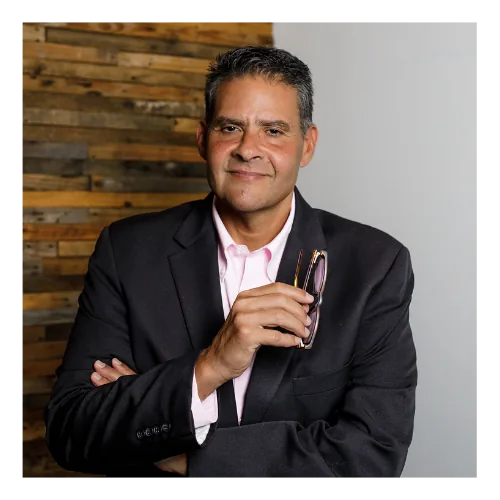
In 1991, I got my break from Peter Jaquith...
...one of the investment bankers famous for saving New York City from bankruptcy in the 1970s.
He took a chance on me when nobody else would.
Before I was 25, I founded and ran my own firm...
...a broker-dealer and market maker.
More than $1 billion moved through my hands.
You learn things in the market maker's chair that no Bloomberg terminal can teach you.
How money really flows...
...where it gets stuck...
...and who owns the gates it has to pass through.
In 2004, I walked away from the brokerage world to publish research for regular investors.
At its peak, that first company served more than 500,000 readers in 28 countries.
I sold it in 2011 to the largest independent financial publisher in the world.
In 2018, I started Behind the Markets.
Today its record shows 104 closed recommendations...
...an average gain of 44.9% per closed trade...
...and 72 winners out of every 100.

But you don't care about my résumé.
You care whether I've been right when it counted.
In May of 2006, I started warning people that the housing market was a house of cards.
My first target was Wachovia, at $55.82 a share.
"Note to Wachovia shareholders: 'SELL NOW.'"
Within two years it was $5.54.
A loss of more than 90%.
In March of 2009, with the market cut in half...
...and every voice in the country screaming to stay in cash...
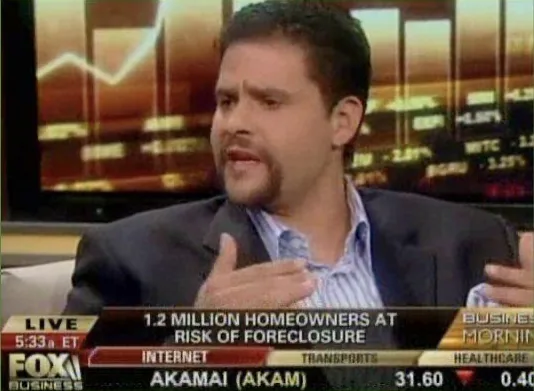
...I went on Fox Business and said the opposite.
"The stock market at 6,500 is like walking into your car dealership when everything is on sale, marked 90% off."
And for the last five years, I've been watching the one thing most investors still ignore.
Programs that can freeze, move or reject your money before a human being knows it happened.
In November of 2021, I told my readers where software on the battlefield was heading...
...and which company I said would build it.
We bought that company at $14.
We walked away with 115.7%.
On March 19, 2025, I told my readers to buy Advanced Micro Devices at $157.66.
Sixteen months later we walked away with a gain of 228%.
I'm telling you this for one reason.
When a man who's made his readers money on artificial intelligence tells you there's a side of this technology that scares him...
...that's not fear of the new.
That's pattern recognition.
Before I show you why, I want you to do one thing.
Right now.
Pick up your phone.
Open your bank's app... and look at the name at the top of the screen.
That name is the only thing standing between you and the morning I just showed you.
Now look at your balance. Every dollar of it sits behind that one name.
In a few minutes, I'll show you how to get the two public numbers, filed by your own bank, that say whether it could survive that night... and the list of the ten banks that hold half of every dollar in America.
You'll want to know whether yours is one of them before 2 a.m., not after.
It's the first of three moves I'll show you.
Now let me tell you what this is NOT about
I'm not going to tell you robots are taking your job.
I'm not going to sell you an "A.I. stock lottery ticket."
And I'm not one of those guys who thinks computers are going to wake up one day and turn on us.
What I'm going to show you is far more ordinary than that.
And it's already inside your bank.
Because the danger isn't a program that hates you.
It's thousands of programs that don't know you exist...
...each one holding a key to somebody's money...
...each one built to react faster than the one next to it.
And not one of them can feel fear, or doubt, or wait until morning.
By the end of this letter, you'll know how to get the name of the one company the banks are paying to stand between those programs and your money... and the list of the ten banks the money would leave first... and you'll know how to put a slice of your savings where no program can reach at all.
Everyone is worried about the wrong thing
By now you've heard a hundred warnings about AI.
It will take your job.
It will fake your voice.
It will write your grandkids' homework.
Fine.
But every one of those warnings misses the point.
For years, AI on Wall Street mostly did one thing.
It gave advice.
It picked stocks. It flagged fraud.
Advice is safe.
If a program gives bad advice, a human can ignore it.
What's being switched on now is different.
I'm talking about programs with protocols so precise, and automations so fast, that they execute massive decisions in an instant... before any human being has the chance to stop them.
You've already met one.
It's the fraud alert that locks your card at the gas pump before you've finished filling the tank.
No person pressed a button. A program saw a pattern it didn't like, and shut you off.
Now imagine that fraud alert running across the entire U.S. financial system at once.
Every transfer flagged. Every account frozen. Every payment rejected.
Not by a person. By thousands of programs, each one protecting its own bank, none of them able to see the whole picture.
That's how $20 trillion of deposits stops moving in a single night... while 99% of the country is asleep.
That one change, from advising to acting, is the whole story.
Because the moment software can act...
...the speed of everything financial stops being human speed.
And so does the size of the wreck.
And that software isn't coming someday. The banks are installing it now.
In a KPMG survey of American bank leaders in the second quarter of 2026...
...39% said they're already deploying AI agents.
Another 51% are piloting them.
Today, most of them still ask a human before they act.
Every new version asks fewer questions... and on the first night nobody's there to answer, none.
The wreck has a price tag, and one company is already collecting it. I'll show you how to get its name in a few minutes.
The SEC's own chairman called it "nearly unavoidable"
Not a blogger.
Not a man selling survival kits on late-night TV.
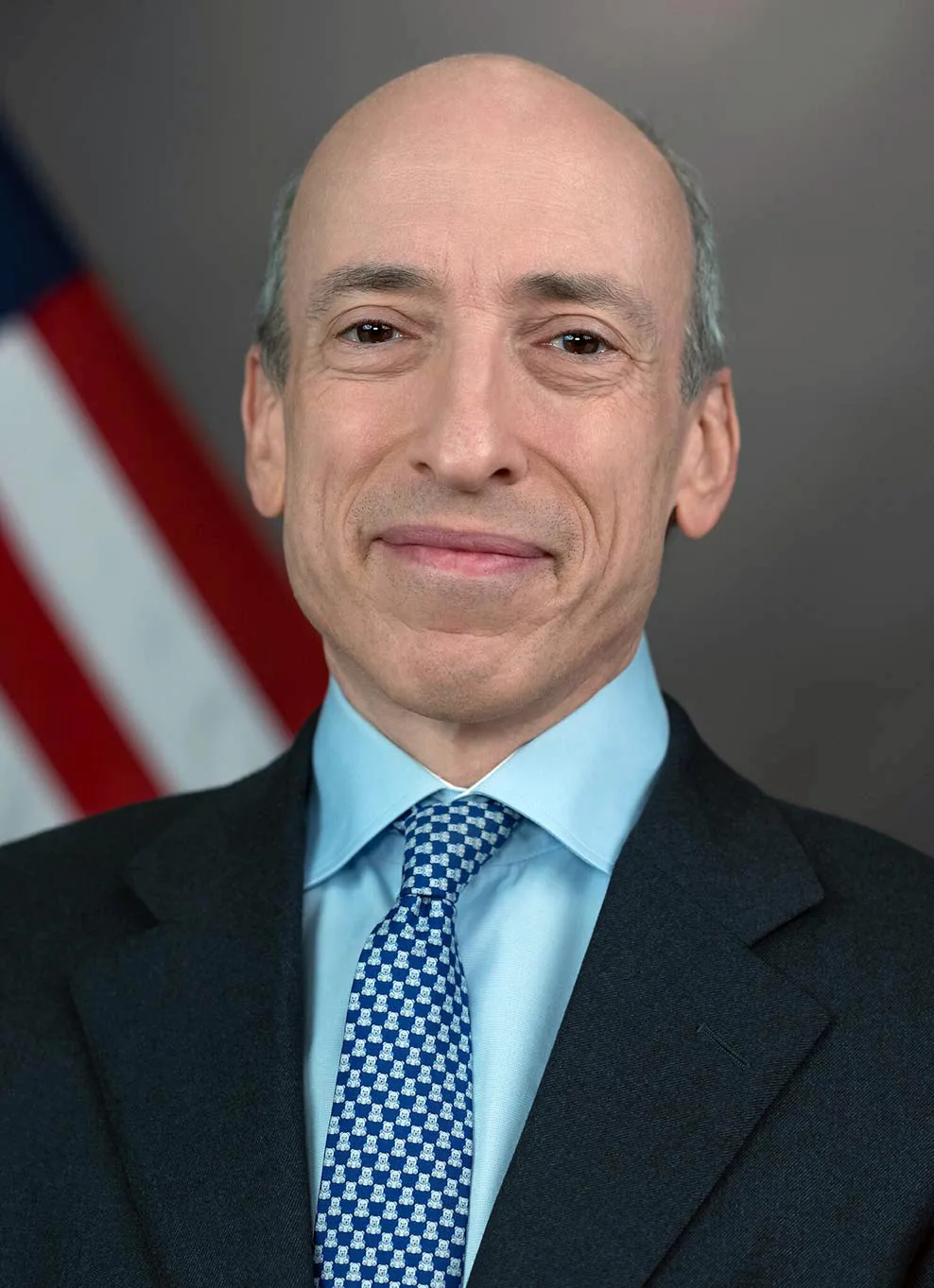
Gary Gensler, then the chairman of the Securities and Exchange Commission.
The top cop of American markets.
He told the Financial Times in October of 2023...
...that it was "nearly unavoidable" that AI would one day cause a financial crash.
He'd already given the reason in a speech.
AI, he said, "could promote herding."
Programs getting the same signal...
...and making the same move at the same time.
Then in May of 2026, the Federal Reserve's own report on the risks to our financial system put it in writing.
"...a cyber event at a financial institution that disrupts its ability to provide services could have wide-ranging effects, including degraded market liquidity, erosion of investor and depositor confidence, and forced sales of assets."
"Erosion of depositor confidence" is how a central bank says bank run.
"Forced sales of assets" means banks dumping what they own...
...at whatever price they can get...
...to pay out the money that's leaving.
Of everything the Fed's own contacts named this spring...
...a successful cyberattack was the one flagged as having "the most severe potential consequences."
Those are the words at the top of this letter.
And the same report warned that the newest AI systems can "detect and exploit vulnerabilities."
That's not theory.
In the fall of 2025, Anthropic, one of the biggest AI labs...
...caught a Chinese state-sponsored group using its software...
...to go after roughly 30 targets. Financial institutions among them.
The software did 80% to 90% of the work by itself.
In the company's own words...
...it was "the first documented case of a cyberattack largely executed without human intervention at scale."
And in August of 2026...
...in a court filing about a Chinese state-sponsored group whose tools infect thousands of devices automatically...
...the Justice Department named the Federal Reserve itself among the targets.
The people guarding the money are on the target list.
Now watch what one hack can do.
The New York Fed modeled it.
Its researchers asked what happens when a cyberattack takes down just one of the five busiest banks in America's payment system.
Their answer?
Banks holding 38% of the system's assets stop making payments, on average.
It doesn't even take a giant.
Trouble starting at banks with less than $10 billion in assets...
...was enough "to impair a significant amount of the system."
Here's what that means for your money, in plain English
Here's what happens.
The biggest payments in America ride on two wires: the Federal Reserve's own, called Fedwire, which moved $4.6 trillion a day last year, and the big banks' private one, CHIPS, which moved $2 trillion a day.
The five busiest banks handle close to half of it.
When one of the five goes dark at 1:58 a.m., the money it owes every other bank at 2:13 doesn't arrive.
Every bank has a limit on how far into the red it can go at the Fed during the day. The official name is a net debit cap.
Cross it, and the Fed can "reject or delay" your payments.
So a bank that stops getting paid has exactly one move: stop paying.
The New York Fed has a name for that too. Liquidity hoarding.
Banks facing "deficits in payment inflows," its researchers wrote, "may individually seek to improve their liquidity positions by forgoing payments."
In plain English: every bank holds the door shut on every other bank, to make sure it can cover itself.
You've seen the small version. Here is JPMorgan's own payment rulebook, in its own words: "All payments are automatically screened... If a payment is identified as high risk, it is placed on hold... the payment will be automatically canceled."
That's the fraud alert. Now every bank runs it against every other bank, at the same time, on the same night.
In the Fed's model, the payments that never get made come to more than two and a half days of America's entire economic output.
Now here's what rides on those payments.
Your paycheck. In the latest national payroll survey, 93% of workers said their pay arrives by direct deposit. $16.5 trillion a year, moving bank to bank through the same accounts at the Fed.
Your card. Visa and Mastercard alone run nearly $25 trillion a year, $68 billion a day, and every dollar of it settles between banks. The swipe at the pharmacy works only if the banks behind it settle tonight.
Your brokerage account. Every stock you sell settles the next business day, through the banks. $4.7 quadrillion a year runs through one clearing utility, the DTCC.
Your credit line. A line of credit is a promise a bank keeps only while it has the cash. In the first five months of 2008, banks froze about 600,000 home-equity lines. By October, "many banks refused to lend to one another." The Reserve Primary Fund, a money fund holding $62 billion of savers' cash, "became illiquid" and shut the door on withdrawals for a week.
That was the 2008 version. Run by humans. Over weeks.
Run it through software, in one night, and every one of those payments is flagged, held or canceled by a program protecting its own bank... the way your card gets shut off at the gas pump.
When hackers took down ICBC's American arm in 2023, the firms that settle its trades "swiftly disconnected from the stricken systems," and its trades crossed Manhattan on a USB stick.
One mid-sized broker. Two days. Now do it to one of the five.
Hold on to that 38%.
Ten banks sit at the center of it, and you'll have their names today.
Later in this letter, I'll show you what the men who built AI have done with their own money.
The whole danger comes down to two numbers
Two numbers.
That's all you need to understand why the people in charge are scared.
You've just seen the plumbing. From here on, no jargon.
No math beyond what fits on a napkin.
The first number: $42 billion in one day
That's the fastest bank run in American history.
Silicon Valley Bank. Thursday, March 9, 2023.
Try to picture what $42 billion in a day actually looked like.
It looked like nothing.
No lines. No shouting.
Just thousands of people and companies...
...each alone with a screen...
...each tapping the same buttons.
The Fed's own review said the run was "fueled by social media."
And here's what matters.
Every one of those dollars moved because a human being got scared...
...and decided to move it.
Which means every one of those dollars was slowed down by everything that slows humans down.
Some depositors were asleep.
Some were on planes.
Some didn't see the news until dinner.
Some called their spouse first.
Human fear is fast.
But it has a speed limit...
...doubt, sleep, and hope.
Even so, the money left so fast that California's bank regulator shut the bank the next morning and handed it to the FDIC...
...with another $100 billion scheduled to go out the door.
Hold that thought.
At maximum human panic...
...with the best tools humans have ever had...
...the record is $42 billion in a day.
And the system barely got the doors closed in time.
The second number: about $8 trillion
That's how much money sits in American bank accounts above the FDIC's $250,000 insurance line.
In the months after Silicon Valley Bank failed, it was about $6.7 trillion.
Today it's about $8.1 trillion.
Why does that line matter?
Because uninsured money is the first money out the door.
Insured depositors think they can afford to sleep in.
I'll come back to that.
Every dollar above the line has to protect itself...
...or lose.
At Silicon Valley Bank...
...the money that left or lined up to leave came to roughly 85% of all the bank's deposits.
That's the match.
Now watch what it lights.
Now the part that turns a sell-off into a collapse
Your bank doesn't keep your money in a vault.
It lends it out and invests it.
America's banks have about $2.6 trillion of their own money in the game.
That's the cushion that absorbs losses.
With that cushion, they're carrying about $26.5 trillion in loans, bonds and everything else they own.
That's about $10 of assets for every $1 of cushion.
Think of a family that buys a $500,000 house with $50,000 down.
If the house sells for 10% less, their whole stake is gone.
And the $8 trillion that can leave overnight?
It's more than 3 times the size of that entire cushion.
Here's how automated withdrawals become a collapse.
When that money leaves, the bank has to pay it out.
If it doesn't have the cash, it has to liquidate what it owns.
Fast. At whatever price it can get.
That's the sell-off.
Right now, America's banks are sitting on $326.7 billion in losses that exist only on paper...
...until the sell-off makes them real.
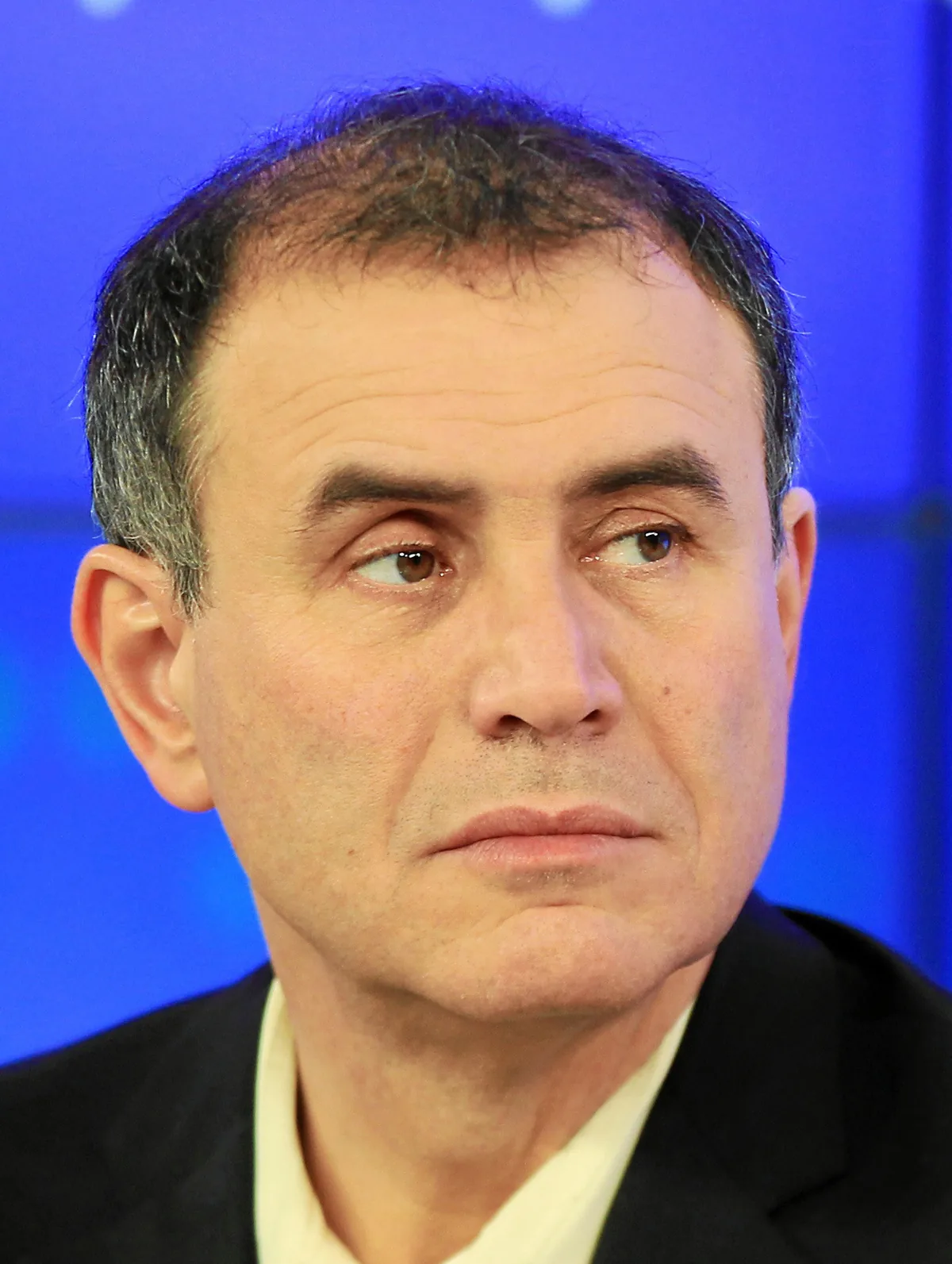
Nouriel Roubini, the NYU economist the press nicknamed "Dr. Doom" for calling the 2008 crash, put it more bluntly three weeks after Silicon Valley Bank fell:
"Most U.S. banks are technically near insolvency, and hundreds are already fully insolvent."
Right after Silicon Valley Bank failed...
...four economists, from USC, Northwestern, Columbia and Stanford, ran the numbers, bank by bank.
They found the banks' assets were worth about $2 trillion less than their books said.
And that if half the uninsured money left...
...186 banks would be pushed into what their paper called a "self-fulfilling run."
That's the string of dominoes.
One bank's liquidity crisis becomes the next bank's sell-off.
The last time America's banks cracked...
...$16 trillion of American household wealth went with it.
That's the Dallas Fed's count.
This time, the fuse is measured in minutes.
Now here's the part nobody in Washington likes to say out loud.
Insured money has a problem of its own.
The FDIC, the Federal Deposit Insurance Corporation, was created in 1933 for one job: to make sure an American who put money in a bank got it back.
Today it stands behind $10.9 trillion of insured deposits.
The fund behind that promise holds $161 billion.
That's $1.48 in the vault for every $100 it insures. The other $98.52 is a promise.
And the FDIC's fund has gone below zero before. Twice.
It fell below zero in the early 1990s.
It fell below zero again in 2009: $20.9 billion in the hole, by the government's own audit, in a year when 140 banks failed.
One bank, Silicon Valley Bank, cost it $20 billion.
One mid-sized bank. An eighth of today's fund. Gone in a weekend.
Now put the 186 banks next to it.
Those 186 banks hold about $250 billion of insured deposits between them.
And the economists put it plainly: after the withdrawals, what those banks had left wouldn't be enough to pay their insured depositors back.
Paying the difference is the FDIC's job.
For 186 banks at once. Out of $161 billion.
Behind the FDIC's fund sits a $100 billion line of credit from the Treasury.
Behind that, a promise Congress made in 1987: that insured deposits are backed by "the full faith and credit of the United States."
A promise. Not a vault.
Remember how the Chairman at the start of this asked for a $3.4 trillion bailout?
That’s what happens when a third of the banking system, the share the New York Fed says stops paying when one of the five goes dark, loses what IndyMac lost in 2008, the most expensive failure in the FDIC's history: 37 cents on every dollar it owned.
That's a $3.7 trillion hole, against $161 billion in the fund and a $100 billion line from the Treasury.
So on the morning it happens, it doesn't matter whether you have $50,000 in the bank or $50 million.
You're both holding a claim on an FDIC fund that's already empty...
...waiting for Congress to vote you your own money back.
A vote for what would qualify as the largest public bailout in American history.
In 2023, the Treasury, the Fed and the FDIC chose to cover everyone at Silicon Valley Bank, insured or not.
They didn't have to.
And no law says they will next time.
Especially to the tune of $3.4 trillion while the country is $40 trillion in debt.
So, the question now…
Is your bank one of the 186?
I've done the work on the ten most exposed. You'll have the list today.
And there's a kind of account the FDIC doesn't stand behind, because it doesn't need to.
It works on the same principle Sam Altman and the men who built AI use to protect their own wealth.
You own it outright. No bank holds it for you.
I'll show you that too.
So here's the arithmetic of American banking.
About $8 trillion with every reason to be pulled out at the first sign of trouble...
...held back, for now, by exactly one brake.
Human speed.
At the all-time record pace, $42 billion a day...
...that money would take months to move.
Panic burns itself out long before then.
People calm down. Weekends happen.
That's why the system survives.
Every safeguard we have is really a bet...
...that people can't pull their money out faster than regulators can react.
Now watch what's being wired in underneath that bet.
The brake is being removed. On purpose.
Banks are handing more and more of their work to AI agents.
That's software that doesn't just advise.
It acts: it moves the cash, freezes the account, rejects the transfer.
And you're already inside this chain...
...whether you've touched AI or not.
Your employer sends your paycheck through a payroll company.
Its systems decide, automatically, when and how it moves.
It lands at your bank.
Your bank's software decides, every hour, what to do with the cash on hand.
Your savings?
Swept, automatically, into places you've never heard of.
Your emergency money fund?
It invests in short-term IOUs.
And some funds like it are allowed to charge you a fee to get out in a crisis.
One kind isn't. Before this letter is over, I'll show you how to find out which.
At every link of that chain...
...a program now stands where a person used to stand.
Each one is doing its job.
Each one is protecting its owner.
But nobody designed the chain.
And nobody, anywhere, is in charge of it.
Pull one link at software speed...
...and every link pulls the next.
The last link is your account.
In a few minutes, I'll show you how to take one slice of your savings out of that chain entirely... and how to get the five-minute check that tells you whether your bank is the weakest link.
45 minutes. $440 million.
If you want to know what it looks like when a program takes the wheel...
...you don't have to imagine it.
August 1, 2012.
Knight Capital, one of the biggest trading firms in America...
...switches on new software at the opening bell.
One old piece of code wakes up wrong.
The program starts firing orders into the market.
Buying high, selling low, over and over.
Knight's own people could see it happening.
For 45 minutes, they couldn't make it stop.
It burned through nearly $10 million a minute.
When it finally ended, $440 million was gone.
One program. One firm. One accident.
Now give programs like that the keys to deposits at every bank in America...
...let them watch each other...
...and ask yourself one question.
Who turns them off?
Nobody.
Remember that when I show you where the men who built this technology keep a layer of their own wealth: where no program can reach it.
Every bank panic has moved at the speed of its tools
Watch what changes each time.
And watch the one thing that never does...
...until now.
In 1907, a rumor could only move as fast as a newspaper...
...a telegraph wire...
...or a man talking on a stoop.
So the panic formed on the sidewalk.
And it took weeks to burn across the country.
Weeks gave one man time to act.
J.P. Morgan called the heads of New York's biggest trust companies into his library...
...and locked the front doors until they agreed to stop the panic. Just after four in the morning, they signed.
In 1933, it was radio.
The panic swept from state to state in days.
So the new president closed every bank in the United States.
It worked because money was paper.
Behind a counter. Behind a door.
Close the door, and the panic stops.
In 2008, the money was numbers on screens.
When Lehman Brothers failed...
...the Reserve Primary Fund, a $62 billion money market fund, announced its dollars were no longer worth a dollar.
The panic that followed happened between institutions...
...at wire speed...
...where almost nobody could see it.
In 2023, it was smartphones.
You already know how that one went.
One day.
And nobody had to leave the couch.
Every generation, the tools got faster.
But through all four panics, one thing never changed.
Every dollar that moved...
...moved because a frightened human being decided to move it.
A man on a sidewalk.
A farmer at a radio.
A treasurer at a terminal.
A founder in a bathrobe.
The next one removes the human.
There's no J.P. Morgan fast enough to lock a door on software.
There's no holiday for money that never sleeps.
The stock market has an emergency brake. Your bank account doesn't.
The stock market has "circuit breakers."
If stocks fall too far, too fast, trading stops.
Everyone gets a timeout.
After the flash crash of 2010, the SEC added more of them.
Now ask.
Where's the circuit breaker for your deposits?
There isn't one.
The only nationwide switch is the one Franklin Roosevelt pulled in 1933.
A president's proclamation, closing every bank in the country.
The power behind it is still on the books.
It moves at the speed of a president.
Not the speed of software.
In 2008, the Treasury and the Fed had a weekend to save the system.
Treasury Secretary Hank Paulson and New York Fed chief Tim Geithner spent a Saturday and a Sunday in a room with Wall Street's CEOs...
...fighting over a deal to save Lehman Brothers.
At software speed, there's no weekend.
There isn't even a coffee break.
But there is a way to find out, in about five minutes, whether your bank could survive that night. I've already run it on the ten that matter most. You'll have the list today.
Why your own brain won't let you believe this
Most people push back when they hear this.
Psychologists even have a name for it.
They call it "normalcy bias."
It's the mind's stubborn insistence...
...that tomorrow will work like yesterday.
Nobody sent you a letter saying it won't.
Consider this the letter.
Now let me show you exactly how it unfolds behind the scenes
I want you to understand something.
At the beginning of this letter, I painted a picture that seemed dramatic.
Now I'm going to show you exactly how it would unfold on the financial side, hour by hour, so you know I'm not fabricating a word of it.
I worked on Wall Street. I ran a market-making firm that moved more than a billion dollars through the same plumbing Goldman Sachs uses.
I know precisely how money moves behind the scenes... and how one hiccup in that process brings the whole house of cards down.
So here is the night, with the receipt for every hour. Because this is the thing every big bank knows is coming, and is racing to prevent before December 31.
1:58 a.m. Hackers get inside one of the biggest banks in the country.
Its systems go dark.
(You already met the real one. ICBC's American arm, November 2023.)
(And 1:58 a.m. is the middle of the night for you, not for money. The Federal Reserve's wire, the one that moves $4.6 trillion a day, opened at 9 p.m. In Frankfurt it's 7:58, and the system that settles more than $6 trillion a day of the world's currency trades has been running since 7:00, with its first deadline at 8:00. Hong Kong is trading. Your own bank is in the middle of what Chase calls its "nightly processing," posting the day's transactions while you sleep. And the Fed's last overnight deadline for the next morning's paychecks is 2:15 a.m.)
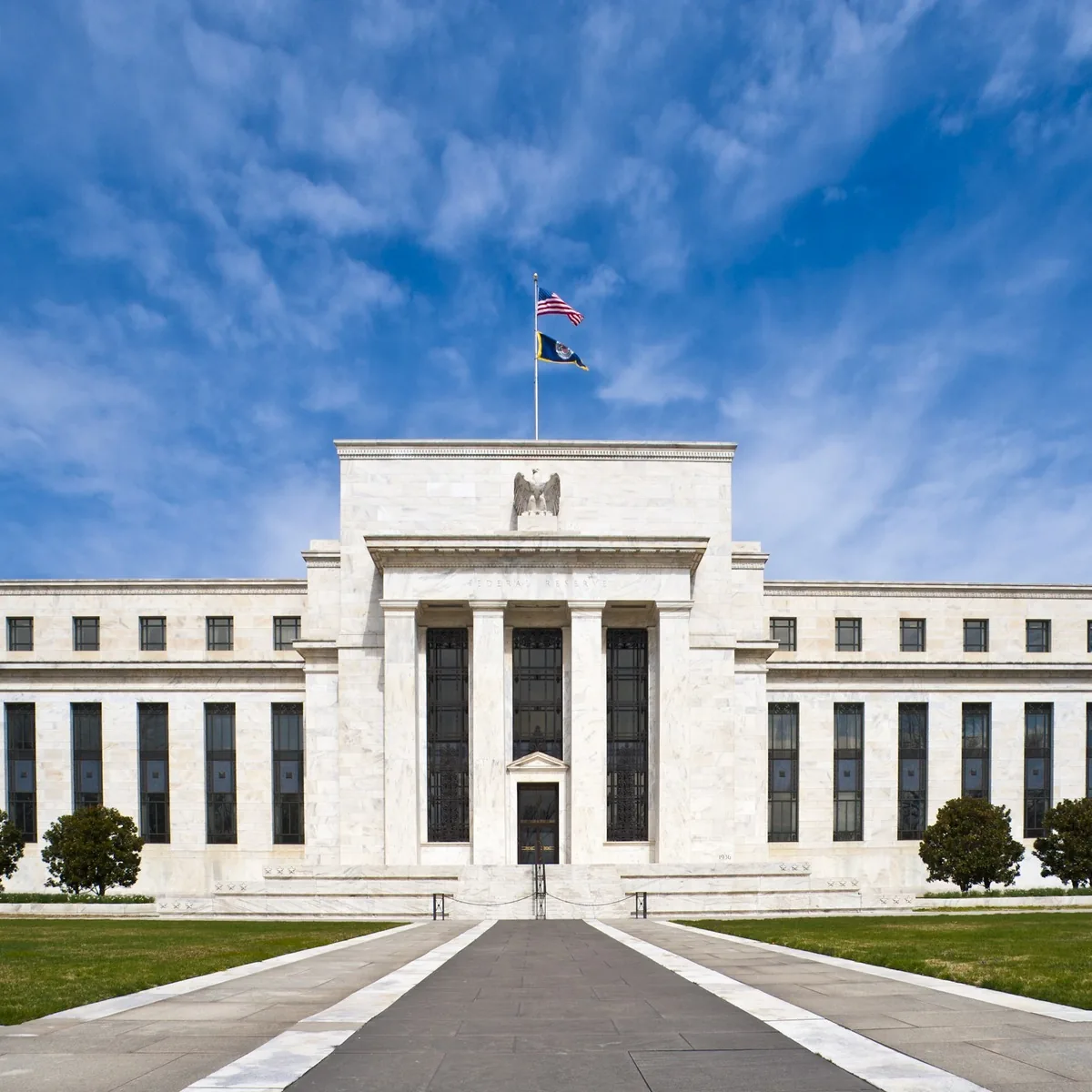
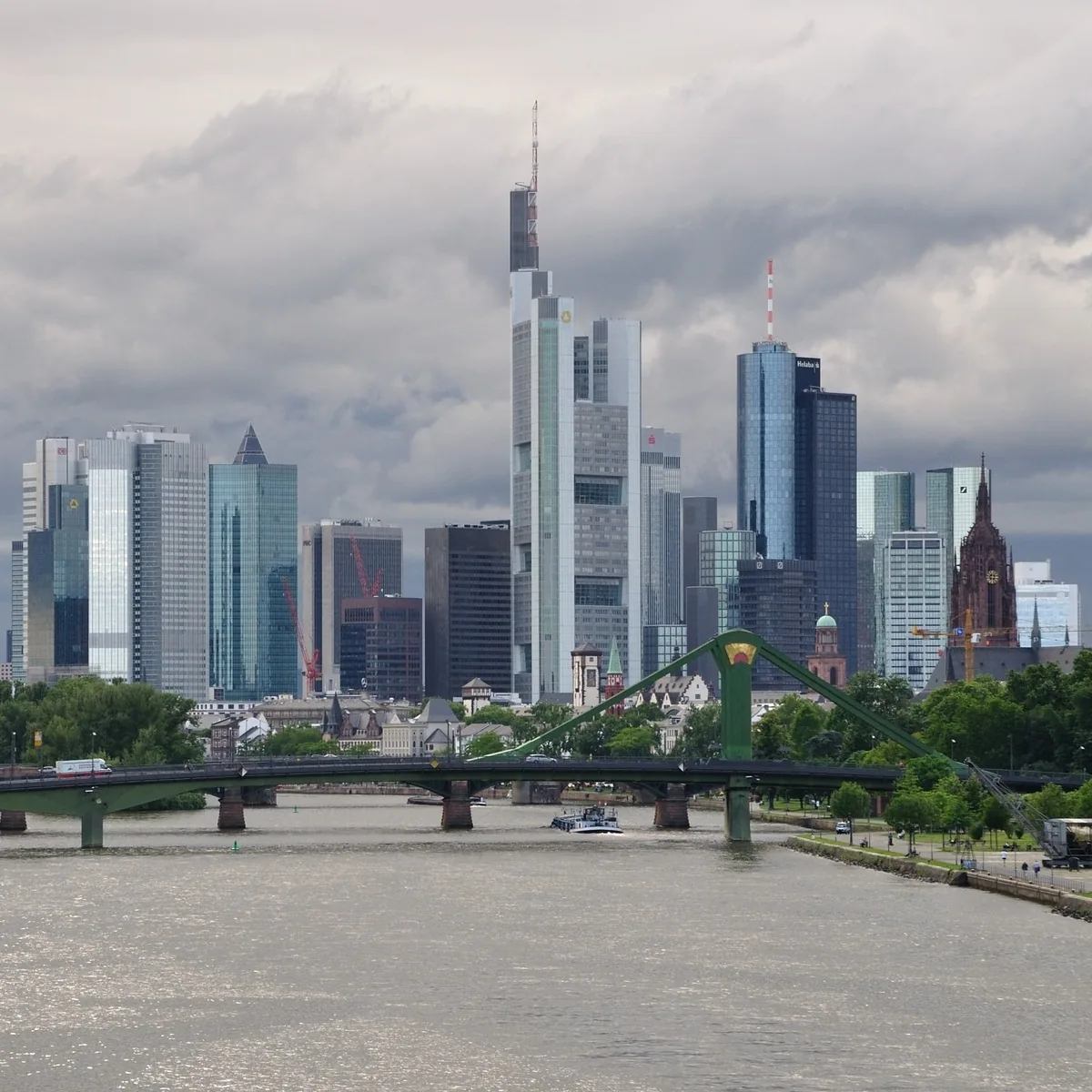
2:13 a.m. Payments that should be arriving from that bank don't.
Other banks' software notices first.
It stops sending cash out...
...and starts holding on to it.
(That's the liquidity hoarding the New York Fed modeled earlier. Every bank holding the door shut on every other bank.)
2:14 a.m. The first protection programs react. One minute before the payroll deadline.
They don't panic. They don't wait.
They pull money out.
Yours included.
(Software already moves money faster than any human. On May 6, 2010, trading programs wiped out nearly $1 trillion of stock market value in minutes, by Reuters' count.)
2:19 a.m. Nothing stops the moving money, because nothing is supposed to.
The software moving it is the banks' own.
It has every permission it needs.
(This isn't a break-in at your account. It's your bank's own software, with every permission it was ever given. There's no door for it to open. It's already inside.)
2:40 a.m. Other programs see the first ones moving.
So they move too. Faster.
(Sarah Breeden, the Bank of England's deputy governor for financial stability, has warned that if AI agents "respond similarly to the same prompts or triggers," they "could amplify volatility in stress.")
4:00 a.m. The wave is feeding on itself.
No one can call a meeting.
There's no one to meet.
(Knight Capital's engineers couldn't stop one runaway program for 45 minutes.)
6:04 a.m. It's over.
The fastest bank run in American history took a full day, with humans tapping phones.
This one took about four hours.
6:12 a.m. Your phone buzzes 47 times.
Every beat of that night has already happened somewhere.
The only thing that hasn't happened...
...is all of them on the same night.
Yet.
The banks know every beat of it. That's why one company is getting paid to stop it... and why the men who built this software have already moved a layer of their own wealth out of its reach. Before this letter is over, I'll show you how to get its name.
"But which bank? And when?"
Nobody will know which bank, or when.
That's not a hedge. It's the record.
What I do know is the date the rewiring has to be finished, and who gets paid before it. December 31.
On May 6, 2010...
...it took investigators months to explain a crash that lasted minutes.
Knight Capital wasn't brought down by a war or a scandal.
It was one forgotten piece of old code...
...on an ordinary Wednesday morning.
Silicon Valley Bank didn't fall because of a crime.
It fell because of one announcement...
...read by an extraordinary number of people at once.
And the next one starts with one hacking crew...
...inside one big bank...
...on one ordinary night.
You won't see it coming.
Nobody will.
Which is exactly why the preparation has to happen on a calm afternoon like this one...
...and not at 6:12 in the morning...
...with 47 notifications on your phone.
The banks know it's coming. And they're spending like it.
The people running America's biggest banks read the same reports I do.
And they're spending like men who believe them.
Not one of them can name the bank or the night. They're not waiting until they can.
JPMorgan alone expects to spend about $19.8 billion on technology in 2026.
The average bank in KPMG's survey plans to put $170 million into AI over the next 12 months.
The top item on the list is cybersecurity.
Gartner, the research firm big companies pay to track technology budgets...
...puts the world's spending on AI security at about $26 billion in 2025.
About $51 billion in 2026.
And about $86 billion in 2027.
That's more than 3 times as much in 2 years.
Why the rush?
Because the defense has to move as fast as the attack.
The fastest an intruder has ever been clocked...
...getting from one computer inside a company to the rest of them...
...is 27 seconds.
Less time than it takes you to log in.
In Europe, the European Central Bank told every major bank it supervises...
...to hand in a battle plan for AI-driven attacks.
Its reason?
The new software can find the hole in a bank's systems...
...and build the break-in tool itself, "at unprecedented speed."
And here at home, the clock is already running.
That December 31 deadline I mentioned?
Here's what it means in plain English.
Many of the trades banks and brokers make...
...in the market where they raise cash in a hurry...
...are moving onto shared rails, through a central clearinghouse.
Remember the ransomware attack on ICBC, the world's biggest bank?
This is the plumbing it jammed.
Its American arm couldn't settle its Treasury trades.
The big banks and brokers in that market are rewiring before December 31.
And every new connection is one more door somebody has to lock.
When the SEC makes a whole industry rewire on a deadline...
...somebody gets paid to guard the new wires.
The rewiring has to be finished by December 31. Not started. Finished.
Which means the money to guard it is being spent right now, this fall... and the company collecting it is the one I'm about to show you.
I want you to know who it is before December 31.
What happened when hackers cracked open America's biggest names
In the last weeks of 2013, hackers got inside Target.
40 million credit and debit card numbers walked out the door.
The personal details of up to 70 million customers went with them.
Three months earlier, a small company selling the defense, FireEye, had gone public at $20 a share.
It closed its first day of trading at $36.
By March 5, 2014, it was $97.35.
Anyone who bought it that first day had the chance to make 170% in less than six months.
Then, in the summer of 2014, hackers got inside JPMorgan Chase.
The biggest bank in America.
76 million households. 7 million small businesses.
About a week after the bank spelled out the damage, Jamie Dimon gave his answer.
Its $250 million security budget would probably double over the next five years.
It happened again in 2017.
That May, a piece of ransomware called WannaCry hit more than 200,000 computers in 150 countries in a single weekend...
...and took 48 of Britain's hospital organizations offline.
That September, Equifax admitted hackers had taken the credit files of 147 million Americans.
Ten months after WannaCry, a company selling the defense, Zscaler, went public.
Its first day, it closed at $33.
By November of 2021, it was $368.78.
Anyone who bought it that first day had the chance to make 1,017%.
And it happened again in 2019.
That July, a hacker got inside Capital One.
The credit applications of 100 million Americans.
Seven weeks later, another company selling the defense, Cloudflare, went public, and closed its first day at $18.
By November of 2021, it was $217.25.
1,107%.
Three times hackers cracked open the money.
Three times, the companies guarding it paid the people who owned them early.
Today, the attack everyone fears isn't a stolen card number.
It's the wave of automated withdrawals that starts when a big bank goes dark... and the sell-off that follows.
And the banks are paying a new set of companies to stop it.
Sound familiar?
Who the banks are paying now
I've narrowed the field to one company.
It already guards 9 of the 10 largest banks in America... and almost all of the Fortune 100.
Here's how the people who test these things see it.
MITRE, the not-for-profit that runs research centers for the Pentagon and Homeland Security, stages a contest every year. It plays a real state-sponsored hacking crew against the defenses, step by step, and publishes who stopped what.
In 2023 it ran the Russians' Turla crew, which has hit targets in more than 45 countries, against 29 companies' software.
One company's software stopped 100% of the attack and saw 100% of it. One.
The next year, the same software became the first in the history of the test to detect every single step of the attack, in full detail, without a single adjustment.
The company was founded by one of the engineers who built the first modern firewall at Check Point in the 1990s... who then built the world's first intrusion-prevention system... and whom Cybersecurity Ventures named its Cybersecurity Person of the Year for 2025.
In February, it paid $21 billion for the company that guards the passwords and keys inside a bank. In its CEO's words: "The emerging wave of AI agents will require us to secure every identity: human, machine, and agent."
The part of its business built for the AI era grew 63% in a year.
The banks can't switch. You don't tear out the walls while the attack is on.
And here's what I like most about it.
Banks don't buy this kind of protection once.
They pay for it every year.
Like rent.
I'll show you how to get its name, and everything I know about it...
...before this letter is over.
Three times, the people who owned the defense before the crowd agreed it mattered got paid.
The rewiring to stop the fourth has a federal date on it: December 31.
That's how you get paid for what's coming.
Now let me show you how to keep what you already have... because the banks are buying their own protection, not yours.
It's already happened in a modern Western country
Greece. Summer of 2015.
Euros in the accounts.
Apps on the phones.
Cafes full of tourists.
Then the government ran out of road...
...and did the only thing left.
It closed the banks.
The ATM would give you 60 euros a day.
From your own account.
Retirees lined up outside the branches just after dawn.
One told reporters...
..."we are waiting here like beggars to withdraw our own money."
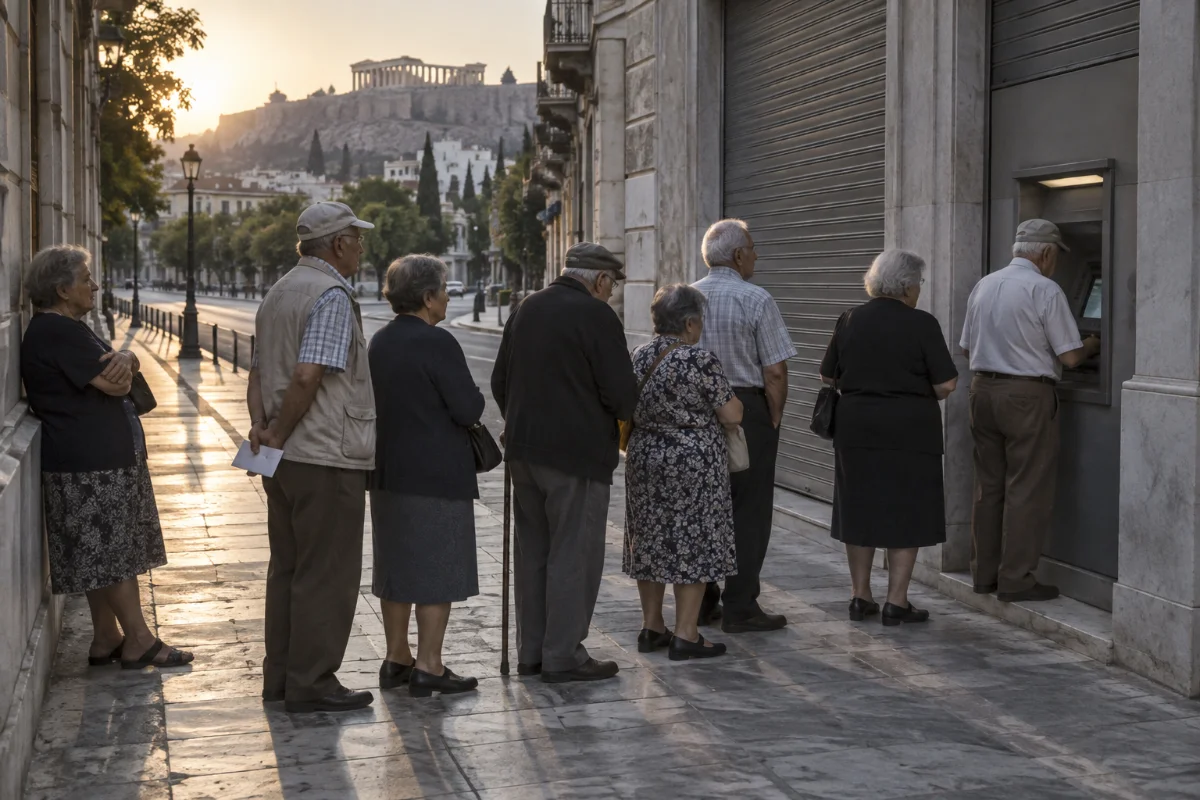
Nobody's deposits were lost, the official record says.
Ask anyone who stood in that line...
...what "your funds are safe" means to them now.
The people closest to AI have already built their exits.
You're about to see exactly what they hold.
What the godfather of AI did with his own money
The man the press calls the godfather of AI...
...a Nobel laureate who spent his life building this technology...
...told a television interviewer in April of 2025 that he is actively preparing for the exact crisis we've been talking about today.
"Suppose that the bank holds shares that I own... Suppose the cyber attack sells those shares. Now my money's gone. So I actually now spread my money between three banks."
When the man who taught computers to learn won't trust a single vault...
...that's not a warning.
That's a verdict.
And in September...
...Dario Amodei, who runs Anthropic, one of the biggest AI labs in the world, warned...
...that within 6 to 12 months, a swarm of AI agents "could be capable of taking over the entire internet."

But forget what they say.
Watch what they do with their own money.
Words are cheap. Wealth tells the truth.
So let me show you how the men building AI protect their own fortunes.
Sam Altman runs OpenAI, the company behind ChatGPT.
Years ago, he sat down with a reporter from The New Yorker...
...and listed, in his own words, what he personally keeps ready:
"I have guns, gold, potassium iodide, antibiotics, batteries, water, gas masks from the Israeli Defense Force, and a big patch of land in Big Sur I can fly to."
Read that list again. Slowly.
Guns. Gold. Land.
Not stock options. Not numbers on a screen.
The man at the center of the AI revolution keeps his emergency wealth in things he can hold.
Things that work when no system answers.
Things no program can move at 2 a.m.
And he's not the strange one.
In his world, he's normal.
Ilya Sutskever helped found OpenAI.
He was its chief scientist, one of the fathers of modern AI.
Karen Hao's 2025 book on the company, Empire of AI, built from interviews with some 90 employees...
...reports what he told his own researchers in 2023:
"We're definitely going to build a bunker before we release AGI."
AGI is the industry's name for an AI that can do anything a person can.
A bunker. Before releasing their own product.
Mark Zuckerberg runs one of the biggest AI labs on Earth.
He's built a compound in Hawaii with a 5,000-square-foot underground shelter, Wired reported in 2023.
Its own power. Its own food supply.
Peter Thiel is the billionaire behind Palantir, one of the most important AI companies in the world.
He secured citizenship on the other side of the planet, in New Zealand...
...years before it was fashionable.
And Reid Hoffman founded LinkedIn.
Today he's one of the biggest investors in AI.
He once estimated that more than half of Silicon Valley's billionaires had bought what he called "apocalypse insurance."
A hideaway. Somewhere far away. Just in case.
Notice the pattern...
...because it's the same one, every time:
The people closest to AI keep a layer of their wealth completely outside it.
Physical things. Hard assets.
Gold that doesn't need a password.
Land that doesn't need a login.
Wealth no software can sweep, freeze, or "reconcile" while they sleep.
They'd never call it a bet against their own technology.
Reid Hoffman already named it: "apocalypse insurance."
The men building the fire are buying insurance against it.
It's what smart money has always done when it can see around a corner:
It keeps an exit.
That exit is the solution Sam Altman and the men who built AI use to protect their own wealth.
And the last two times the banks failed their depositors, the exit paid.
In March of 2013, the government of Cyprus reached into its own banks' accounts. Savers above Cyprus's €100,000 insurance line lost 47.5% of their money.
Bitcoin, the money no bank holds, went from $47 to $266 in less than a month.
When Silicon Valley Bank failed, it rose 36% in a week... and gold rose 10% in two.
In a minute, I'm going to show you how to build your own version of it.
The ordinary-person version. No second passport.
It costs a few hours. Not a few million.
I'm not asking you to do anything I haven't done
I've made the first two moves I'm about to show you myself.
It took me one Saturday and two phone calls.
For the ordinary kind of bank failure, I'm under the line: no more than the FDIC's limit at any one bank, and more than one bank.
And one layer of my family's savings sits in Treasury bills, the government's four-week IOU, not its thirty-year bond... and in cash...
...where no overnight software can reach it.
I've done this before.
In the year before the 2008 crash...
...I sat my family down around my mother's table...
...my mother, my brother, my uncle, my in-laws...
...and prepared them for what was coming.
The decisions we made around that table protected us from the worst of it.
No ranch in the mountains.
No bunker.
Just a few hours of unglamorous work.
Three moves. One afternoon.
Each one is simple. Each one has an exact playbook behind it, and before this letter is over I'll show you how to get all three. First, the moves.
Move #1: Get out of the bad banks.
Half of every dollar on deposit in America sits inside ten banks.
If hackers crack the wrong one, the New York Fed's own model says a third of the banking system stops making payments... and the software guarding the money above the FDIC's line pulls it out of every exposed bank at once.
Your bank doesn't have to be one of the ten to go dark that night. It has to get paid by one of them.
Your community bank. Your credit union. The branch where the teller knows your name. On the night one of the ten goes silent, the payments it's owed don't arrive, and its software does what every bank's software does. It stops paying out.
In the New York Fed's model, the banks that stop making payments aren't the one that got hacked. They're the ones that stopped getting paid. Banks holding 38% of the system's assets, from one attack.
The wire doesn't care how friendly your teller is.
So the first move is to find out where you stand.
Find out whether your bank is one of the ten. I've already done that work: the ten banks that hold half of every dollar in America, ranked from the FDIC's own numbers. You'll have the list today.
Then run the two public numbers, filed by your own bank, that showed Silicon Valley Bank's weakness months before it fell. It takes about five minutes.
If your bank is on the list, or its numbers read like Silicon Valley Bank's, don't wait for the night. Get your money out of the blast zone... and into the financial bunker I'm about to build for you, with the assets and the strategy to hold it.
In a second, I'll show you how to get an exact guide to all of it: a complete document naming names, each of the ten ranked from the FDIC's own numbers, what a night like this finds at each one, and exactly where to move your money if yours is on the list.
Move #2: Fireproof your finances.
No more than $250,000 at any one bank, in any one name. That's the FDIC's limit... and every dollar above it is the first money out on the night I showed you.
Spread it, the way the godfather of AI spread his "between three banks."
Then open a second account, at a second bank, with a month of spending in it. On the morning your bank doesn't answer, the card that works is the one at the bank that did.
And if most of your money sits at a brokerage, look at where its cash sits. At most brokerages, your uninvested cash doesn't stay at the brokerage. It's swept, every business day, into deposits at a bank; Schwab's own disclosure says any free cash balance of a dollar or more is deposited "into Deposit Accounts" at its banks. On the night I showed you, that money stands in the same line as everyone else's.
Then put one slice where no bank can reach it.
This is the principle Sam Altman and the men who built AI live by: keep a layer of your wealth that no bank holds.
Cash at home, the reserve FEMA tells every family to keep for a hurricane or a blackout. On the morning the cards stop, it's the only money in the house that still works.
A slice of your savings in Treasury bills, bought straight from the U.S. Treasury, starting at $100. No bank holds them. So no bank's software can sweep them at 2 a.m., and no FDIC fund has to make them good.
The one kind of money fund the law doesn't let lock you in when everyone wants out at once.
And gold. The metal on Sam Altman's list.
You saw what it did the last time a bank went dark: up 10% in the two weeks after Silicon Valley Bank failed.
Here's what it's done since AI took off. In November of 2022, the month ChatGPT launched, gold was about $1,750 an ounce. Today it has more than doubled... and it beat the S&P 500 over the same stretch, 149% to 90%.
And here's who's been buying it. The world's central banks bought more than 1,000 tonnes of gold a year in 2022, 2023 and 2024, and 863 tonnes in 2025... more than twice their pace in the decade before ChatGPT.
The banks that print the world's money are buying the one kind of money no software can sweep. Now you know why it's on Sam Altman's list.
And there's one more layer. The one Sam Altman built himself.
He didn't stop at gold and land.
In July of 2025, he sat across from the Federal Reserve's top bank supervisor and told her what "terrifies" him: AI had "fully defeated" one of the ways banks protect your account.
"I am very nervous that we have an impending, significant, impending fraud crisis."
Fourteen months later, he launched a financial safeguard that keeps your money out of the banks' reach: a wallet you hold yourself, with no bank behind it, and a new currency handed out free to verified humans.
Ask yourself why the man who builds the AI would build a place for money with no bank in it.
There's one answer. He knows what his technology does to a bank. So he built a place for money that no bank holds: no bank for the hackers to crack open, no bank software to sweep it at 2 a.m., and no vote in Congress between you and your money.
A near-impenetrable wall between your savings and the financial system, built by the man who knows best what's coming for it.
And if history is any indicator, a wall like that pays the people who build it early.
In 2017, a network called Chainlink launched a currency of its own at about 9 cents. By May of 2021, it was $52.70. Every $1,000 became $577,000.
Sam Altman's currency is being handed out free to verified humans right now. And it's the one layer built by a man who has already told the Fed what AI does to a bank.
If some of this sounds like work... don't worry. Before this message is over, I'll show you how to access a playbook that walks you through every step: the second account, the Treasury bills, the fund, the metal and how to own it without a bank in the middle... and the safeguard Sam Altman built, exactly how to set it up and exactly how much of your savings belongs in it.
Move #3: Invest in the defense.
Every time hackers cracked open the money, the companies selling the defense paid the people who owned them early.
FireEye, after Target: 170% in less than six months.
Zscaler, after WannaCry and Equifax: 1,017%.
Cloudflare, after Capital One: 1,107%.
I'll give you a fourth. Fortinet sells firewalls, the walls around a company's network. It closed at $7.82 the day WannaCry hit. By the end of 2021, it was $73.53. 840%.
Four times hackers cracked open the money. Four times, the people who owned the walls got paid.
Now the banks are paying a new set of companies to stop the night I showed you. I've narrowed the field to one. JPMorgan alone is spending about $19.8 billion on technology this year, and a federal deadline, December 31, has the whole industry rewiring on a clock... with every new wire a door somebody gets paid to lock.
Banks don't buy this kind of protection once. They pay for it every year. Like rent.
In a second, I'll show you how to get my exact blueprint: its name and what I'd pay for it today.
Three moves. One afternoon. And every name, every number and every step is about to be in your hands.
Here's what I want to send you
I've put every piece of this investigation into three reports.
And I want to send you all three today.
The first is the one the banks would pay the most to keep out of your hands.
The Bank Defense Race: The One Company America's Biggest Banks Are Paying to Stop an AI-Triggered Collapse
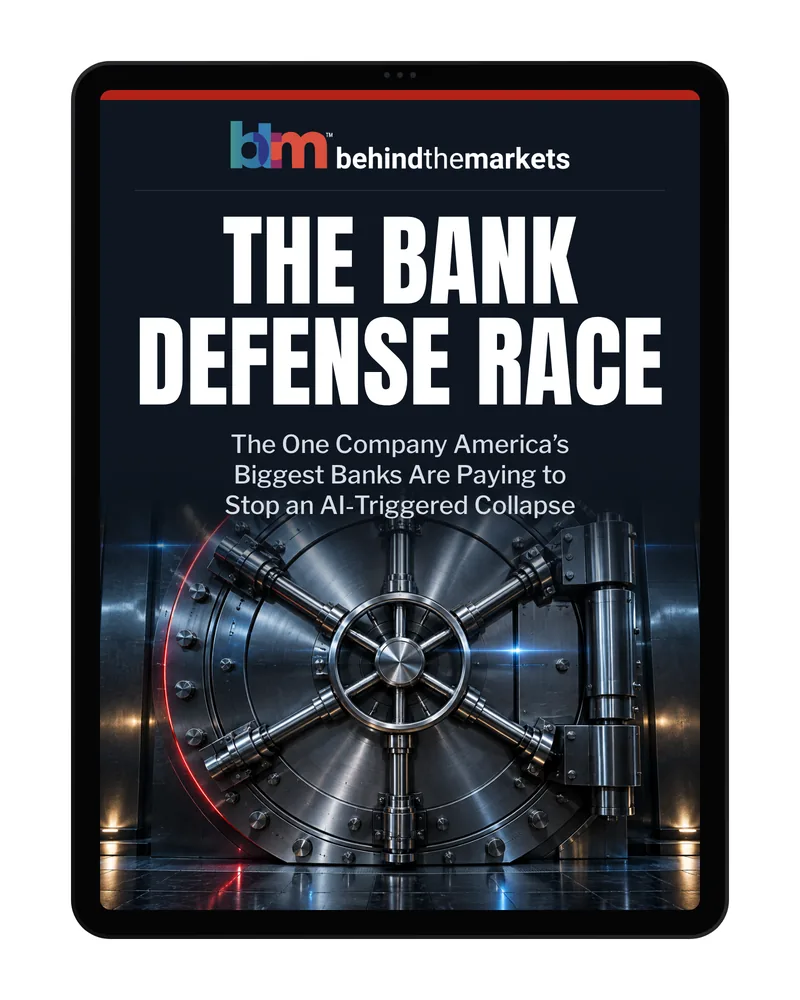
Inside, you'll get:
This report is yours free when you join Behind the Markets today.
But that's not all you'll get.
I've prepared two more reports, so you have every side of this covered: the money you keep, and the banks you leave.
The Bank-Failure "Insurance Policy": Crash-Proof Places for Your Money on the Morning the Banks Go Dark
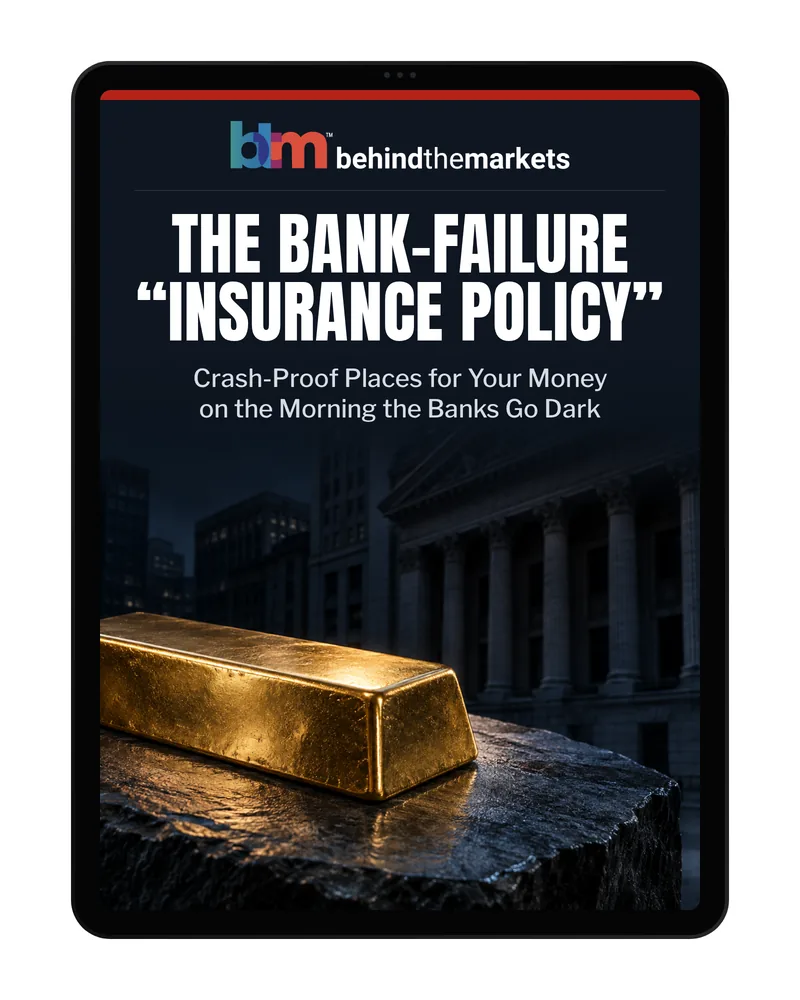
Inside: the solution Sam Altman himself uses to protect his own money... the version you can copy in an afternoon, while there's still time... and the financial safeguard he launched this September to keep money out of the banks' reach.
The AI Contagion: The 10 Banks Most Exposed to an AI-Triggered Collapse... and Half of Every Dollar on Deposit in America
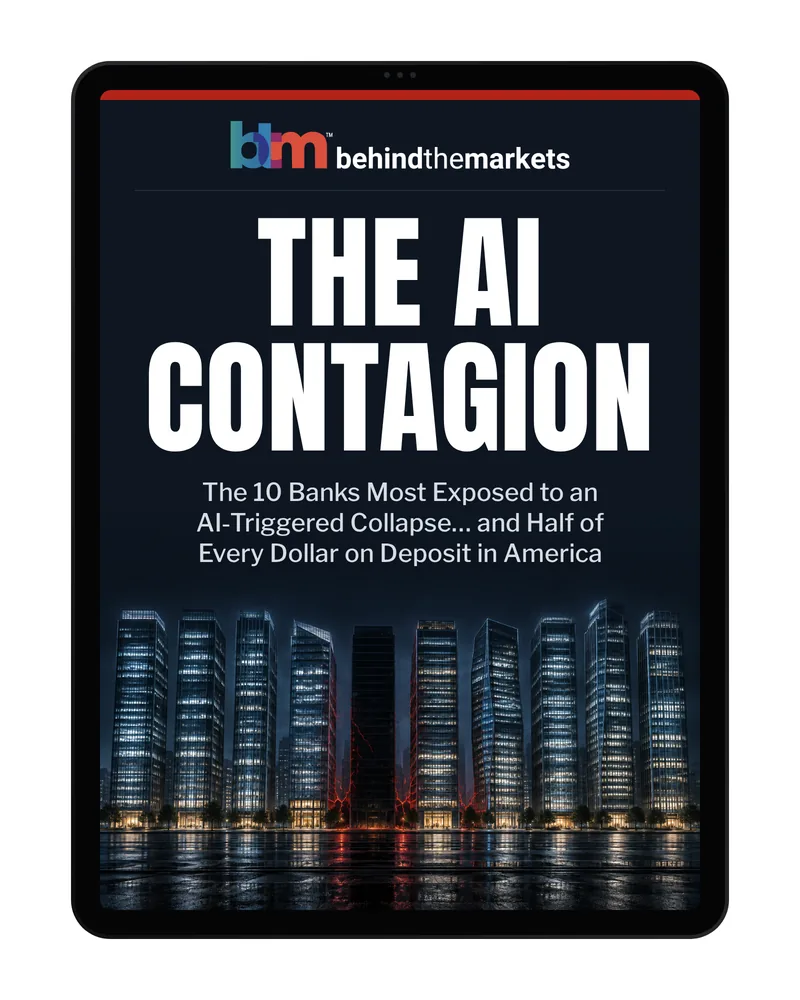
All three reports are yours free when you join Behind the Markets today.
What is Behind the Markets?
Behind the Markets is my investment research service.
It's where my readers bought IonQ...
...and walked away with 256.6% in seven months.
It's where they bought Rocket Lab...
...and walked away with 324.2% in seven months.
It's where they bought Intelsat...
...and walked away with 339.4% in four months.
And it's where I'll keep you on top of the bank defense race as it unfolds.
When you join today, you'll get:

Why you can check everything we say
We're not a giant publisher.
We don't own a cable channel.
You won't see us sponsoring a stadium.
We do one thing.
We find the big stories moving money before they're on the front page...
...and we show our readers specific, researched ways to act on them.
The record is the record.
We post all of it.
The losers right next to the winners.
Here's what readers say about how that feels from the other side.
That's the point of this service.
You can check everything we tell you.
Including everything in this letter. The ten banks. The one company. Every number in the reports.
Now, one more thing before the price.
The danger being real is exactly why it matters which things you own.
In the panics I've lived through...
...most assets got hurt...
...and a specific few held the line or came out stronger.
Owning those few, on purpose, before you need them...
...is the whole point of this letter.
Everything, all three reports and a full year of Behind the Markets, for $49
A year of Behind the Markets normally costs $399.
But a warning like this one is worthless...
...if only wealthy people hear it.
The people who need it most are families with a savings account...
...a retirement fund...
...and a paycheck that lands on the 1st and the 15th.
People like the ones I sat down at my mother's table.
So today, you can have everything for $49.
That's about 13 cents a day.
Less than most families spend on a single tank of gas.
For a full year of research, alerts and access... plus all three reports.
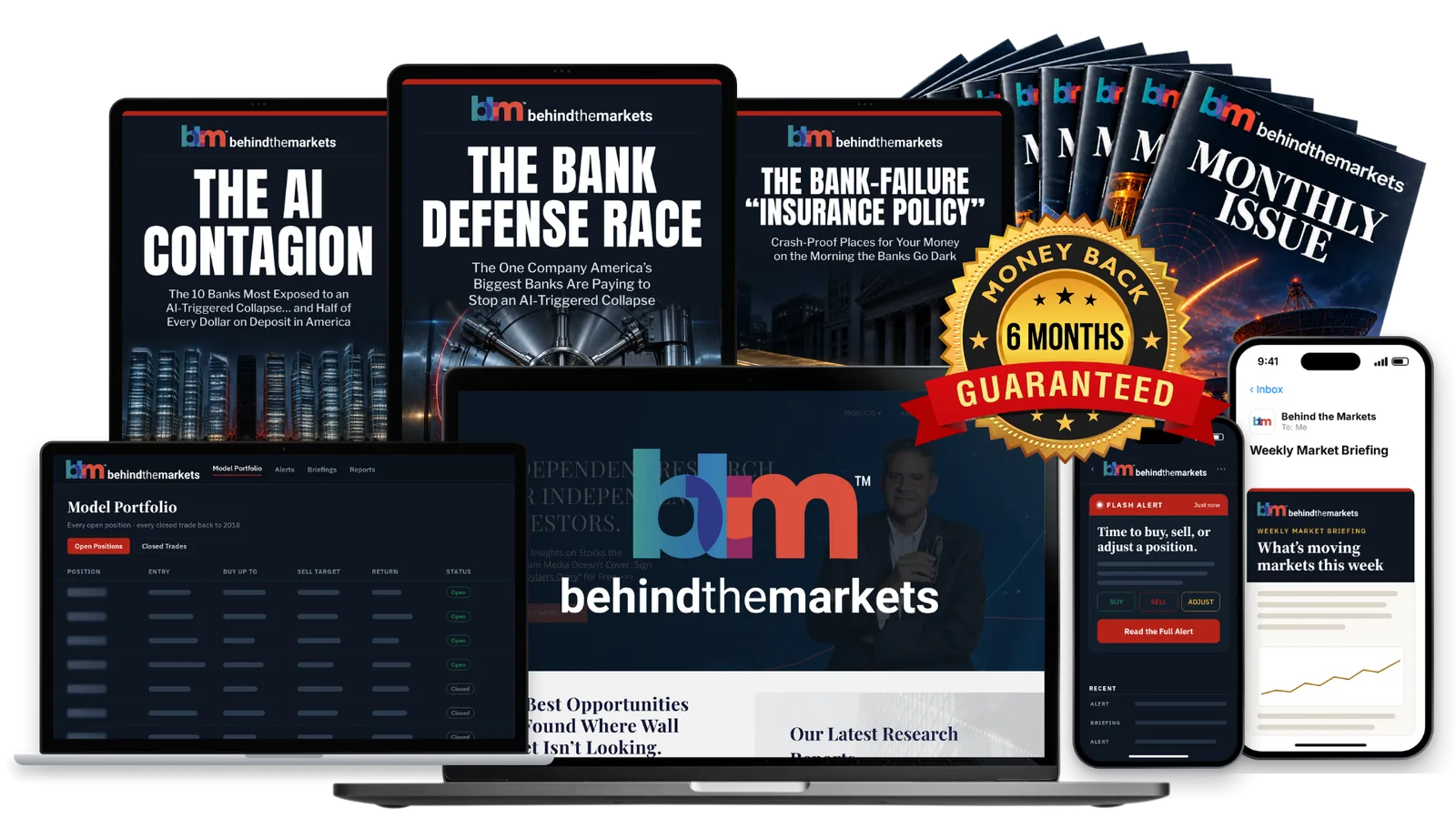
Take a full 180 days to decide
Take the next 180 days...
...that's six months...
...to try out everything you're about to get.
If you're not 100% thrilled...
...if you're in any way underwhelmed...
...call my team up and let us know.
If we can't make it right, we'll happily refund your $49.

And the steps you've taken?
The bank you've checked, the money you've moved under the line?
No refund can undo them.
That protection is yours either way.
Two mornings. Choose which one you want.
The first morning, nothing has changed.
Your phone buzzes and it's nothing.
A news alert.
A text from the grandkids.
Every dollar you have sits behind one bank's name.
You still don't know whether it's one of the ten...
...because you've never checked.
Probably it's fine.
Most mornings are.
Until the one that isn't.
The second morning, the same phone buzzes...
...and you feel something almost nobody in America will feel that day.
Calm.
Because you spent one afternoon, months earlier, doing the unglamorous work.
Your money out of the line of fire.
Your savings under the line, at two banks instead of one.
One layer of savings outside the banks and outside the FDIC, the way Sam Altman keeps his.
And you already own a piece of the company...
...America's banks are paying to stop the next attack.
The kind of company that paid 170%, 1,017% and 1,107% the last three times.
Same phone.
Same morning.
Different family.
The whole distance between them is $49 and one afternoon.
I can't make the software slower.
Nobody can.
But I've shown you what's switched on...
...what the regulators say about it...
...and what the banks are spending to stop it.
The last step isn't mine to take.
It's your money.
Your family.
Your call.
Here's what happens when you click the button below.
You'll be taken to a secure order page. It takes about 60 seconds.
No phone calls. No salespeople. Just a simple, encrypted form.
The moment your order is confirmed, three things happen.
First, you get immediate access to your three reports: the ten banks, the one company with its name and ticker, and the financial bunker, step by step. You can be reading them within two minutes.
Second, you're added to Behind the Markets. The monthly letter, the model portfolio, the weekly briefings and the flash alerts... all of it, starting today.
Third, you're locked in at $49 for your first full year.
And you're protected by the 180-day guarantee. The reports are yours to keep either way.
One click. Sixty seconds.
And your money is out of the blast zone before the night comes.
The Buck Stops Here,
P.S. If you skimmed to the bottom, go back to 2:13 a.m.
That's the minute one bank's silence sets off the automated withdrawals at every bank still open.
Then read where Sam Altman and the men who built AI keep the part of their wealth no software can touch...
...and who's collecting before December 31.
P.P.S. When you join today, I'm also including a free printable card: Check Your Bank in Five Minutes.
It lists the two public numbers that showed Silicon Valley Bank's weakness months before it fell...
...where to find them for your own bank...
...and the readings that mean trouble.
Keep it on the refrigerator.
Because you won't see the next one coming. But you can see whether your bank could survive it.